
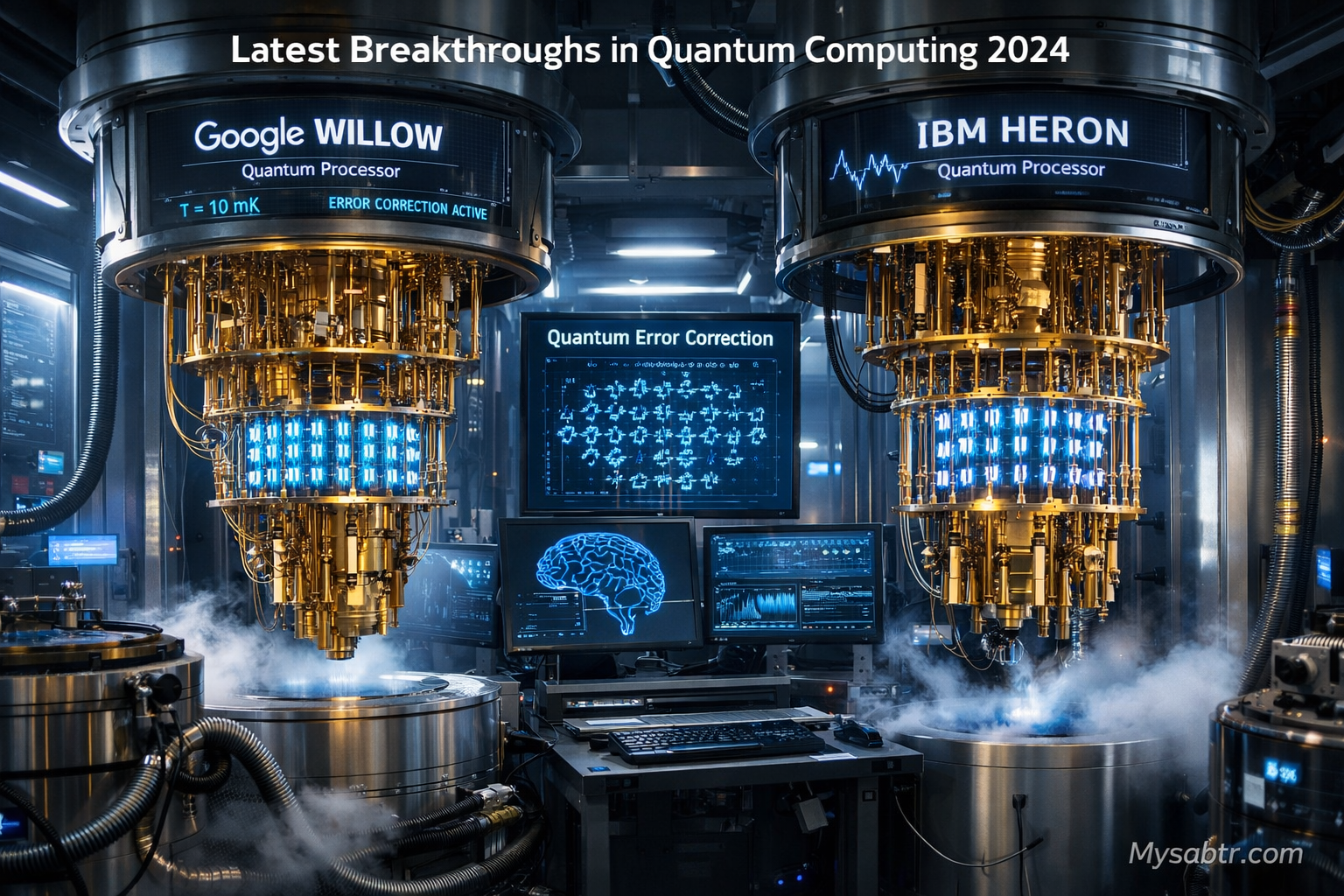
The quantum computing revolution is a shift away from binary information processing systems and towards the strange laws of quantum physics. This section examines the fundamental concepts behind quantum computing and why scientists around the globe are working to perfect the technology.
Computers that use bits for processing information represent data by either zeroes or ones. Quantum computers use qubits (quantum bits), which are capable of being both zero and one at the same time. This is achieved by a superposition principle. Quantum systems can evaluate a large number of possible outcomes at the same time, instead of processing them in a sequential manner like conventional machines. Combining superposition and entanglement – where one qubit’s state instantly affects another, regardless of distance – you can create a computing powerhouse that is capable of solving complex problems. Quantum supremacy is often used to describe this leap in computing capability. It’s a benchmark that shows a quantum device has the ability to perform tasks beyond conventional technology.
This paradigm shift in technology is of global importance. Classical computers have reached their computational and physical limits as our problems become more complex. From simulating molten structures to optimize global supply chains or simulating the molecular structure of life-saving drugs, we are facing increasingly complicated modern challenges. Quantum computing is a way to overcome these limitations and provide unprecedented analytical power, which could transform entire industries. The government and corporations invest billions in quantum research because those who harness fault-tolerant computing can gain a huge advantage.
It is important to understand this industry landscape because the year 2024 will be of great significance for it. Since the 1960s, this technology has been confined to theoretical physics and laboratory settings with highly-controlled environments, fragile experimental equipment, and high levels of control. We are now witnessing a transition from abstract experiments in physics to engineering solutions that can be scaled. Instead of focusing on adding noisy qubits, the focus is now on creating reliable and stable systems capable of executing complex algorithms with minimal interference from environmental factors. The transition sets the stage for an era in computational science that will touch on every facet of our lives, digital or physical.
Major Hardware Breakthroughs That Defined 2024
In 2024, the hardware of quantum computing underwent a massive evolution, as major companies unveiled processors pushing the limits of what was physically possible. The section focuses on the hardware advances, like Google’s Willow processor and IBM’s Heron chip, which have revolutionized the industry.
Google’s Willow quantum chip made news this year when it was introduced. It is a highly sophisticated hardware piece that features 105 superconducting qubits. It isn’t just the qubit count that makes this processor so impressive; it’s also its ability to scale beyond thresholds. In the past, as quantum hardware grew in size, adding physical qubits would result in an increase in noise, computational errors, and system reliability. This trend was reversed by the Willow chip, which proved that with careful engineering and an advanced architectural design, error rates could actually be reduced as systems scaled. The Willow chip’s success is concrete proof that commercial quantum computers are not just an abstract dream but a feasible engineering goal.
IBM’s Heron processor was launched in parallel with Google, a 156-qubit, ground-up system that prioritizes performance and reliability. IBM’s engineers concentrated on improving quantum circuit performance and reducing errors, which resulted in a more stable computing environment. IBM also integrated its Heron processor in the modular Quantum System Two Architecture, an innovative approach that allows for multiple quantum processors of different types to work together harmoniously. The modular architecture mimics that of traditional data centres, providing a path for quantum computing to be scaled up by adding interconnected processors.
Using alternative technologies, other major players have also made great strides with hardware development. The companies working on neutral atom systems have demonstrated that they can trap and control hundreds or thousands of individual atoms with highly focused lasers. This is a highly flexible alternative. Optical quantum computing systems that use photons or particles of light as qubits have made remarkable advances in their ability to operate closer to room temperature. This eliminates the need for massive cryogenic cooling systems. The diverse hardware advancements of 2024 show a competitive, healthy ecosystem, where many viable pathways are converging towards the ultimate goal of large-scale quantum computing.
The Evolution of Quantum Error Correction and Logical Qubits
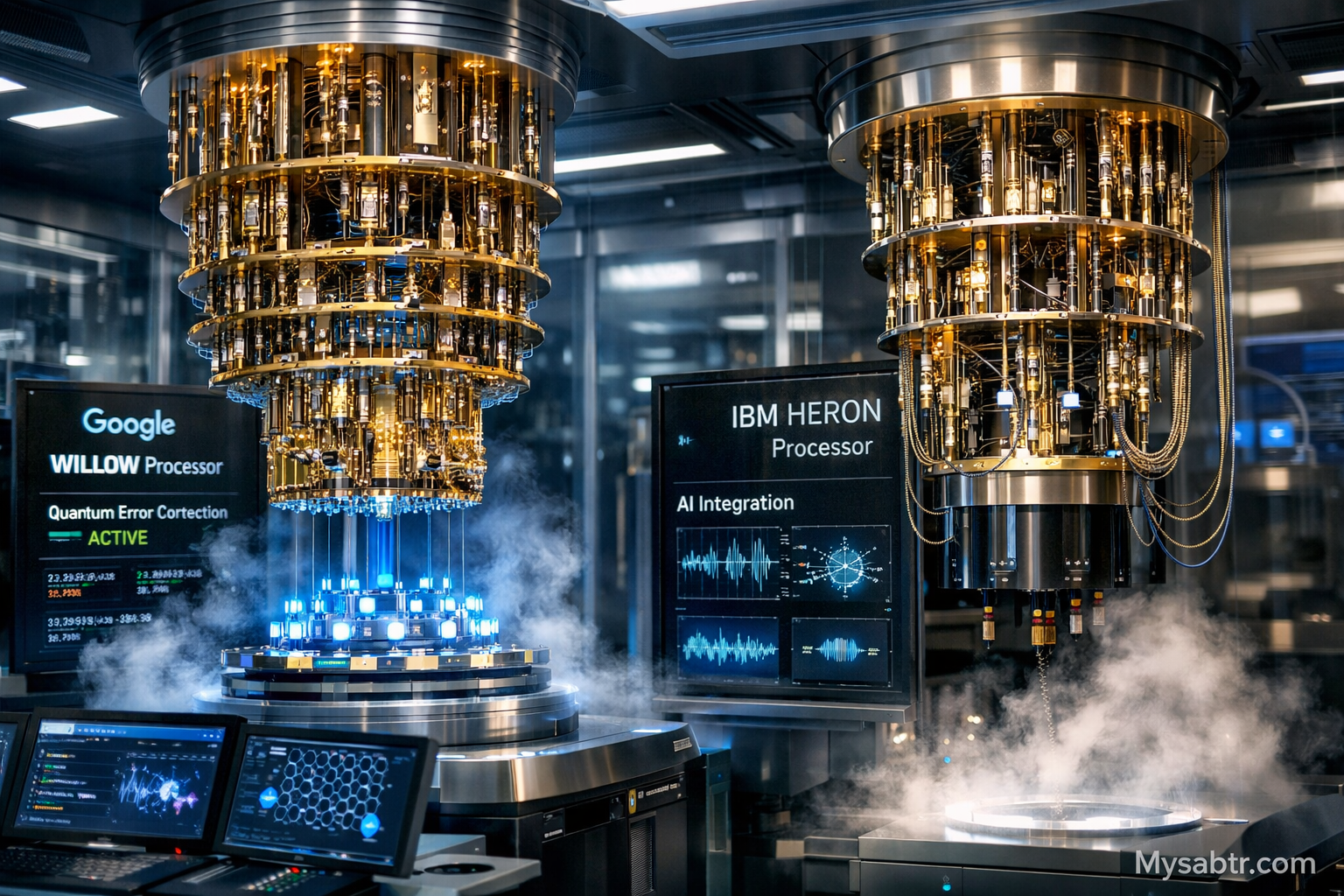
Quantum computers are fragile and easily affected by even the slightest noise, heat, or electromagnetic radiation. This section examines the incredible advances in quantum error-correction and the implementation of logical qubits that were made by researchers between 2024.
Quantum error-correction is the biggest hurdle that the industry has to overcome in order to reach fault-tolerant quantum computers. The laws of quantum mechanics prohibit the direct copying of an unknown quantum state. This is in contrast to classical bits that can easily be copied and tested for errors. Scientists must therefore use sophisticated mathematical coding techniques in order to safeguard the sensitive quantum information. Researchers achieved an unprecedented level of success by 2024 in their efforts to group multiple qubits into a highly stable computational unit known as a “logical qubit”. Spreading the quantum information over a large array of qubits allows the system to detect and correct errors in the localized area without damaging the computational state. This allows the machine to run longer, more complex algorithms.
This transition represents a major shift in the way we evaluate quantum computing. The industry used to play a numbers game and boast about how many noisy qubits each processor had. The breakthroughs in 2024 proved that qubit quality is more important than quantity. Teams of researchers and companies from different academic institutions have successfully run algorithms using logical qubits, with error rates that are significantly lower than those in their physical equivalents. The experiments showed that logical quantum bits can remain in superposition for long periods of time and can be entangled. This opens the door to deep quantum circuits capable of solving real-world problems.
The implementation of topological error correction codes is also a promising way to create an intrinsically stable quantum system. Researchers have developed configurations resistant to interference by encoding the information in the topological global properties of the quantum system, rather than local particle states. These sophisticated frameworks for error correction have been successfully demonstrated in 2024, which has turned a fault-tolerant quantum computer from a far-off, highly speculative idea into a real engineering roadmap. This accelerates the timeline of when quantum computers might be deployed in commercial data centres.
Emerging Quantum Algorithms and Their Revolutionary Applications
The quantum revolution is not just about hardware. It’s also about developing instructions to harness the power of this enormous technology. This section examines how the new quantum algorithms developed in 2024 are designed to tackle problems that were previously unsolvable by classical algorithms.
Software developers and quantum scientists were able to refine and test a new quantum algorithm generation as hardware stability increased throughout 2024. The new algorithms were designed to take advantage of quantum parallelism. This allows them to move through vast multidimensional data space with great efficiency. In the field of simulation of quantum chemistry, one of the biggest breakthroughs was made. Researchers were able to use variational quantum Eigensolvers with an unprecedented level of accuracy in order to simulate electron interactions inside complex molecules. These algorithms avoided the computational bottlenecks caused by the need to use inaccurate approximations. They did this by directly mapping quantum states from the algorithm onto the quantum state of the target molecules.
Optimization and logistics were another major area for algorithmic innovation. In 2024, quantum approximate algorithms were refined to ensure they could find the best solutions for millions of variables. The algorithms are having a major impact on the global supply chain, portfolio balance, urban traffic, etc. The quantum algorithm does not test every combination individually, but instead evaluates all possible solutions simultaneously and identifies the best path. These algorithms are being tested by financial institutions for fraud detection and risk analysis. They want to gain a competitive advantage in markets that value milliseconds.
Quantum algorithms have also opened up new possibilities in engineering and physics. These algorithms were successfully used by researchers to simulate fluid dynamics and plasma behaviour, which would normally take weeks on supercomputers. Emerging quantum algorithms enable engineers to create more aerodynamic airplanes, engines that are more efficient, and infrastructure that is safer by reducing time and resource requirements. These algorithmic breakthroughs in 2024 show that software is rapidly maturing and ready to take advantage of quantum hardware’s increasing power.
Artificial Intelligence and Quantum Systems: A Powerful Intersection
In 2024, the convergence of quantum computing and artificial intelligence was one of the most dynamic and exciting research areas. This section explains how machine-learning techniques accelerate quantum research and how, conversely, quantum systems enhance artificial intelligence.
Artificial intelligence is a vital tool that quantum engineers use to stabilise fragile ecosystems of qubits. Researchers successfully used a deep learning neural network to monitor quantum systems in real time in 2024. They were able to identify and predict the microscopically small environmental fluctuations that cause errors and decoherence. These AI models were able to learn from massive datasets on quantum systems’ behavior how to predict and send preemptive, microscopic control signals that stabilize qubits even before an error occurs. The intelligent feedback loop that is active has improved quantum gate fidelity and increased the lifespan of the quantum calculation. This shows how classical AI can be used to achieve fault-tolerant quantum computation.
Quantum computing, on the other hand, is starting to improve artificial intelligence models and machine-learning algorithms. Quantum machine learning algorithms are a powerful and sustainable alternative to classical AI, which is becoming increasingly complex and large, and requires massive energy and training time. Scientists demonstrated in 2024 quantum algorithms capable of performing matrix multiplications, data classifications, and complex matrix calculations exponentially faster than classic GPUs. These hybrid systems are able to process information at incredible speeds by encoding large datasets in quantum states. They can identify hidden patterns, correlations, and financial market data that would be missed with traditional AI.
The symbiotic relation between AI and quantum computers is leading to highly interpretable quantum networks. In contrast to classical deep-learning models that are often opaque, black boxes, where decision-making is concealed, some quantum machine learning algorithms developed in 2024 will allow researchers to trace the logic pathways of the algorithm. The transparency of AI is essential for deployment in industries with strict regulations, such as healthcare and finance. Understanding how an algorithm came to a particular conclusion is as crucial as that conclusion itself. This intersection is generating a loop of innovation, which is speeding up the advancement of both fields.
Real-World Applications Transforming Major Global Industries
Quantum computing is finally transforming into tangible applications, which are reshaping industries. This section examines how breakthroughs from 2024 will be applied to areas such as global climate modelling, drug discovery, and materials science.
Quantum computing has a dramatic impact on the drug discovery process and timeline in the pharmaceutical industry. It takes a long time and costs billions to develop a new drug, mostly because it is difficult to simulate how chemical compounds react with proteins. In 2024, the pharmaceutical industry used quantum algorithms to model complex molecular structure energy states. Researchers eliminate thousands of non-viable drug candidates by predicting their behavior at the quantum scale before they have ever been synthesized. The ability to predict how a drug will behave at the quantum level before it is synthesized in a physical lab allows researchers to eliminate thousands of unviable candidates early on.
Quantum simulations are bringing a new renaissance to materials science. The use of stable quantum processors by engineers and chemists is enabling them to create new, exotic materials. Quantum simulations were crucial in 2024 for the development of superconductors that operate at room temperature and solid-state batteries with high capacities. Understanding how electrons behave in different crystal structures allows scientists to engineer materials with no resistance to electricity or that store large amounts of renewable power safely. The quantum-designed materials will be crucial for the development of a global sustainable energy grid, as well as the advancements in consumer electronics and electric cars.
Quantum computing has also proven to be a powerful tool for fighting climate change through the use of advanced environmental models. Earth’s weather is a complex system of chaos with thousands of variables that interact. This makes accurate forecasting for the long term nearly impossible using classical computers. Quantum computers are better equipped to deal with this complexity. Researchers used hybrid quantum and classical systems in 2024 to simulate the dynamics of ocean currents, atmospheric chemistry, and carbon capture mechanisms with an unprecedented level of precision. The highly accurate models help policymakers, scientists, and researchers better understand the impacts of greenhouse gas emissions. They can also develop data-driven strategies that will mitigate global climate change.
Quantum Computing Landscape: Persistent challenges
The path towards universal quantum computing that is fault-tolerant, despite the amazing milestones reached in 2024, remains full of massive engineering and scientific obstacles. The challenges facing the industry are discussed in this section, which includes error rates, hardware scaling, and complicated infrastructure needs.
Quantum computing is still facing the challenge of qubit fragility. Despite the massive improvement in error correction, logical qubits and base physical error rates remain orders of magnitude greater than those found on standard transistors. The environment is extremely important to qubits. A stray light, even a slight temperature fluctuation, or a weak magnetic force from a wire nearby can make the qubit lose its quantum state. This process, known as decoherence, occurs when a qubit’s quantum state changes. It is a delicate balance to create systems that are able to isolate qubits perfectly from their environment while still allowing them to be used for calculations.
Researchers are also battling to solve the problem of scalability. Although systems that have a few hundred quantum bits are impressive, the machines with millions of physical qubits will be needed to solve global problems. The heat produced by electronic components and control wiring becomes increasingly difficult to manage as you add more qubits. Physical bottlenecks are created by the thick layer of microwave cable required to transmit signals to each qubit. The microscopic heat produced can also destroy the cryogenic conditions necessary to operate superconducting devices. Hardware engineers continue to work on solving the puzzle of creating scalable architectures capable of handling millions of qubits, without succumbing to cross-talk or thermal interference.
The infrastructure costs and operating expenses associated with quantum computers are also a major barrier to widespread access. The most advanced quantum architectures use massive dilution fridges that cool processors down to temperatures as cold as deep space and hovering only a few degrees above absolute zero. The cooling systems require a lot of energy and are expensive to construct. They also need highly-skilled technicians to maintain them. Direct access to high-end quantum hardware is limited to large tech companies, well-funded government labs, and universities with a lot of money. The democratization and widespread use of quantum computing will be severely restricted until the industry develops technologies that operate at higher temperatures or more cost-effective solutions for cooling.
Future Trends Shaping the Next Decade of Quantum Innovation
In the decade ahead, we will see several trends emerge that are likely to influence the future of quantum computing. This section examines the future, with a focus on hybrid quantum-classical systems as well as the development of secure quantum networks.
Quantum-classical hybrids are the most important future development. Industry has widely accepted that quantum computers won’t replace classic computers, but will work alongside them as highly specialized coprocessors. We will soon see a deep integration of classical and quantum computers, where the former handles most program logic and data management, while the latter instantly outsources the more complex multidimensional calculations. The hybrid approach takes advantage of the strengths and weaknesses of each architecture, while allowing companies to take quantum computing to new heights for certain tasks, without having to wait for standalone quantum supercomputers that are fully developed. This hybrid infrastructure is already being built by major cloud providers, making it easy for enterprises to test quantum algorithms.
The relentless pursuit of quantum internet is another massive trend that will shape the future. Researchers are developing quantum networks that transmit data securely over vast distances using entangled photons. A hacker’s attempt to intercept a quantum communication would destroy all data immediately and notify the parties communicating. Quantum repeaters were developed in 2024. These devices are essential to boost the quantum signal across long fiber optic networks, without disrupting the delicate entanglement. This technology will mature and lead to a global network that is unhackable, revolutionizing the security of national information, financial transactions, and secure medical data sharing.
The urgent requirement for post-quantum encryption will also drive major software upgrades across all digital sectors. Governments and regulatory agencies are pushing companies to use quantum-resistant algorithms because a quantum computer that is mature enough could destroy the RSA cryptographic protocols, which currently secure the internet. In the next decade, banks, technology firms, healthcare providers, and other organizations will update their security systems to defend against quantum attacks. The proactive strategy will ensure that the digital infrastructure of the world remains secure and resilient when fault-tolerant, quantum computers arrive.
Read More: Melker Schörling AB / Anticimex Förvärvsstrategi Insights
Summary of the 2024 breakthroughs
In the history of quantum computers, 2024 is a year that will be remembered for its monumental impact. From a time of theoretical predictions and unreliable, noisy experiments to a new era of engineering successes and practical applications. Realizing scalable hardware, improving error correction methods, and successfully implementing logical qubits have all contributed to accelerating the timeframe for quantum computers’ disruption of global industries.
Researchers have created a framework for improving system efficiency and stability by successfully combining artificial intelligence with quantum systems management. Quantum computing has also been proven to be a valuable tool for society in areas such as drug discovery, climate modeling, and materials science. The challenges of infrastructure, cooling, and physical scaling remain. However, with the recent breakthroughs, these will eventually be overcome.
The focus of our efforts will shift to integrating powerful quantum processors into classical supercomputers in order to create hybrid networks that can solve the most complex problems facing humanity. In 2024, the breakthroughs have shown that the quantum revolution has already begun. It is actively changing our understanding of computing, physics, and human innovation. Business leaders, policymakers, and researchers must be aware of this fast-changing landscape. The quantum advances of today will shape the technology blueprints for tomorrow.